Cancer Epidemiology

Deep Learning for Oral Cancer Screening and Referral: DL-CANSCREEN, an artificial intelligence tool

The overall aim of this project was to investigate the feasibility of different deep learning (DL) multiclass digital image classifiers to classify digital photographic pictures of the oral cavity into oral cancer and precancer lesions by differentiating them from healthy mucosal variants and common benign lesions. We aimed to identify the best fitting model with several systematic experiments, to classify individuals in the ‘healthy-to-diseased’ spectrum that may further help in referral pathways and may serve as an automated care linkage tool, in future, for patient care continuum.   It could serve as a decision support system for primary care clinicians at clinical set-ups, an adjunct tool for community health workers for screening & referral and an automated linkage mechanism for patients leading to care continuum. This project was funded by Google – AI for Social Good, India (Google-AISG, 2021-2022) with Carnegie Mellon University, Pittsburgh, USA, as the academic partner.
PROJECT EXECUTION

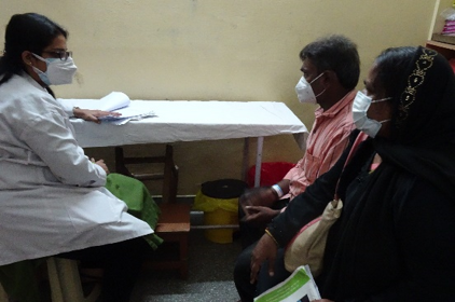
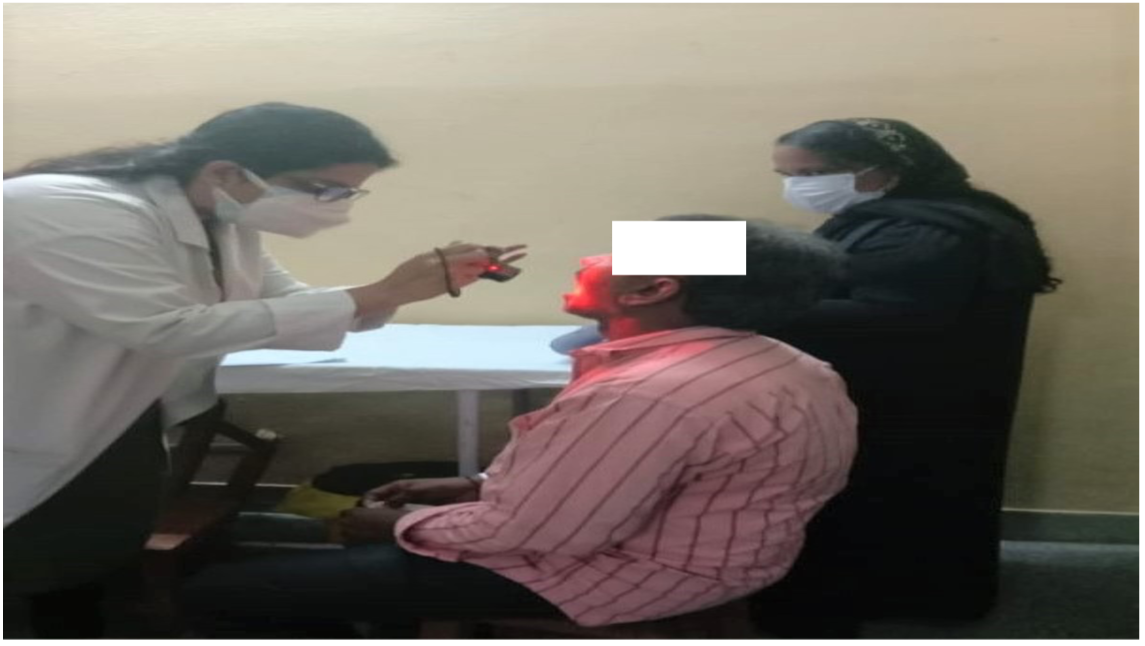
Digital images and risk factor data were collected from cancer care centres, dental academic institutions and hospitals and cancer screening settings across north and south geographical regions of India. The deidentified and labelled digital photographic images included healthy mucosa, mucosal variants, benign oral lesions, precancer lesions, and early and late cancer (biopsy confirmed).

Collaborators

  1. Cancer Institute (WIA), Chennai, Tamil Nadu.
  2. National Institute of Cancer Prevention and Research, ICMR, Noida, UP
  3. Indian Cancer Society, New Delhi
  4. College of Dental Sciences, Davangere, Karnataka
  5. ESIC Dental College and Hospital, New Delhi
  6.  Indraprastha Dental College and Hospital, Ghaziabad, UP

We regrouped image data into three classes – class-1 healthy & benign lesions; class-2 oral precancer lesions and class-3 early and late oral cancer. We trained, tested and validated three DL neural networks for multi-class image classification – EfficientNet, AlexNet and YOLOv5m. We confirmed the performance of the networks through transfer learning with state-of-the art neural networks. We explored best-fitting models for localization of regions of interest and decision-tree analysis using deidentified risk factor data.

Slide

IMPACT

We identified the best-fitting models for classification and precise localization of suspicious lesions, minimizing misclassifications. We documented and disseminated the findings at the Google AI workshop in Sep 2022. This project trained clinicians and technologists across institutions in DL research methods. We have created a secure GitHub repository for data and algorithm for future explorations.

Centre for Chronic Disease Control © 2026 All rights reserved.