Digital Health Healthcare Inclusivity Research

 SAATHI-HF 

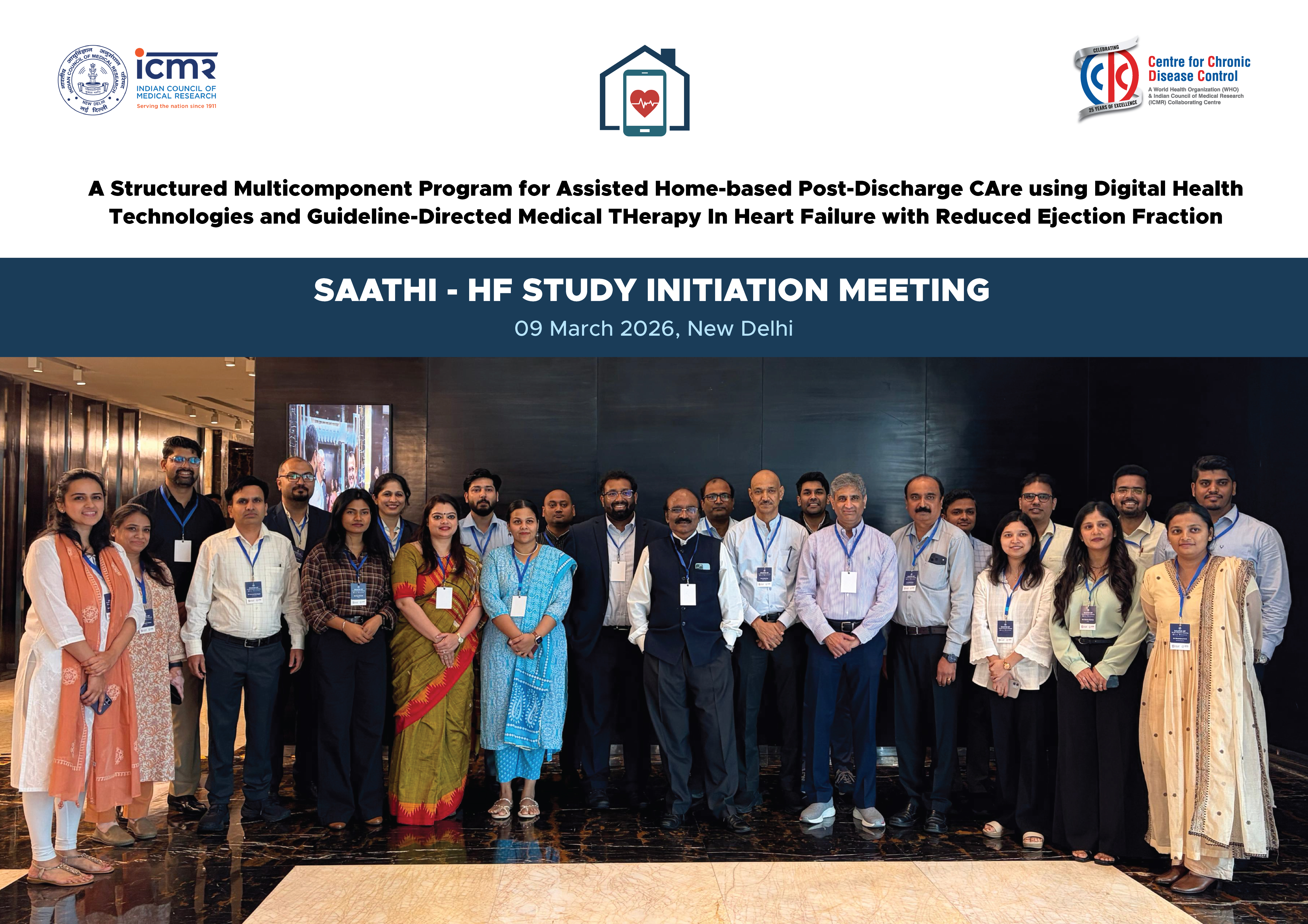
A Structured Multicomponent Program for Assisted Home-based Post-Discharge cAre using digital health Technologies and Guideline-Directed Medical THerapy In Heart Failure with Reduced Ejection Fraction (SAATHI – HF)

Patients with heart failure with reduced ejection fraction (HFrEF) who are admitted following clinical worsening remain at high risk of rehospitalisation and mortality after discharge, making structured follow-up during the early post-discharge period essential. Structured follow-up also supports the initiation and optimisation of guideline-directed medical therapy (GDMT) through ongoing assessment of clinical and biochemical parameters, such as blood pressure, heart rate, congestion status, renal function, electrolyte balance, and treatment tolerability. Regular monitoring enables safe and timely optimisation of therapy, with the potential to improve clinical outcomes, biochemical stability, and overall patient prognosis.

The present study is proposed to test the effectiveness of a home-based multi-component digital healthcare package in post-discharge HFrEF patients against the standard of care. The study will evaluate the model’s impact on HFrEF patients’ rehospitalisation, mortality, quality of life, mental health, cost-effectiveness, and medication adherence against those receiving the standard of care.

This study will validate a first-of-its-kind, multi-component digital health package for the proactive management of patients with heart failure with reduced ejection fraction (HFrEF). The intervention will integrate scheduled home visits by trained healthcare personnel with remote oversight by the treating cardiologist through an assisted telemedicine platform. It will include regular monitoring of symptoms, vital signs, body weight, and essential laboratory parameters, together with AI-based prediction of NT-proBNP spikes to enable early identification and clinical deterioration. Assisted telemedicine consultations and AI-enabled clinical decision support will facilitate comprehensive clinical assessment, optimisation of guideline-directed medical therapy (GDMT), and timely therapeutic adjustments. Collectively, these components will establish a continuous feedback loop of monitoring, risk prediction, clinical evaluation, treatment modification, and reassessment, support personalised, proactive care and improving clinical outcomes in patients with HFrEF.
PROJECT EXECUTION

The SAATHI-HF project will be implemented across 10 tertiary care cardiology centres in India through a structured, technology-enabled, multicentre randomized clinical trial involving patients with heart failure with reduced ejection fraction (HFrEF) following hospital discharge. A total of 2260 participants will be enrolled and will be followed for six months, with the total study duration of 48 months.

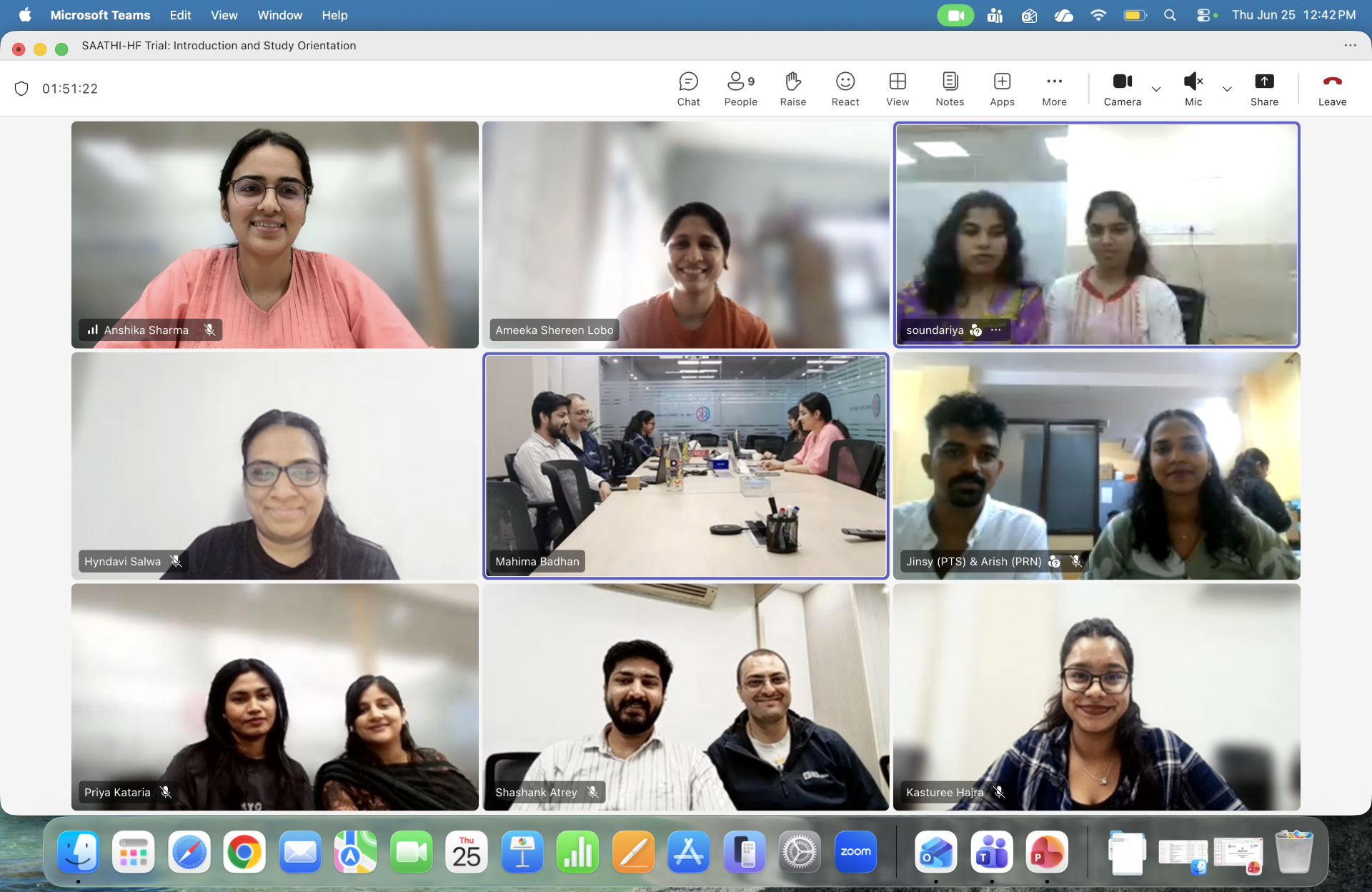
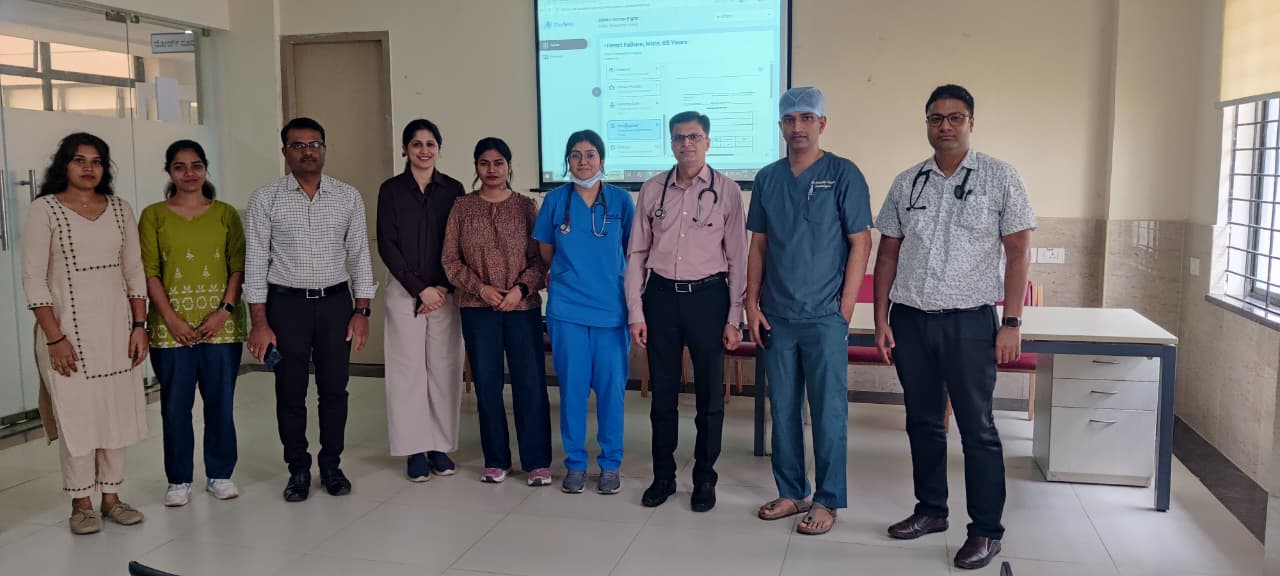
A standardized training model will be used to prepare healthcare professionals and study teams involved in patient management. Training will cover the study protocol, data collection, patient communication, use of the digital platform and wearable device, telemedicine consultations, electronic clinical decision support, GDMT optimization, alert management, and defined escalation pathways.

The intervention will use an integrated digital platform and wearable-based monitoring system to support home management. Data collected through the wearable device will be used for non-invasive, AI-based prediction of NT-proBNP spikes and potential clinical deterioration. Relevant alerts and decision-support information will be reviewed by treating cardiologists, who will assess the patient remotely and provide appropriate guidance or intervention through assisted home-based telemedicine consultations.

The study will also support guideline-directed medical therapy (GDMT) where the focus would be on achieving optimal dose at two months, supported through biomarker-guided treatment optimization with ongoing assessment of treatment response, adherence and patient status. Patients will receive appropriate education and support to encourage medication adherence, monitoring and active participation in their heart failure care.

Research activities will include participant recruitment and follow-up, clinical and outcome assessments, monitoring of mortality and hospital readmissions, assessment of medication adherence, quality of life and mental health, and evaluation of the feasibility of implementing biomarker led GDMT, and cost-effectiveness of the intervention.

Implementation will be supported through standardized SOPs, defined roles and responsibilities, regular training and monitoring, centralized coordination, data-quality checks, technical support and predefined clinical escalation pathways across participating sites. Regular communication, meetings and knowledge-sharing activities will help identify implementation challenges and facilitate timely resolution. Findings from the trial will be used to assess the feasibility of integrating this model into routine healthcare settings and its potential for wider scale-up.

Slide
Slide
Slide
Slide

IMPACT

The SAATHI-HF study aims to generate measurable evidence on the effectiveness, feasibility and scalability of an integrated, technology-enabled model for post-discharge management of patients with HFrEF.

The impact of the project will be assessed through participant enrolment and follow-up, healthcare professionals trained, participating in healthcare sites, home visits and teleconsultations conducted, patients supported through remote monitoring, and the use of wearable devices and the electronic clinical decision support system (eCDSS). Key implementation indicators will include adherence to daily symptom reporting, wearable use, scheduled home visits, teleconsultations, laboratory assessments and eCDSS assessments, as well as timely response to clinical triggers.

The project will also measure clinical outcomes, including mortality and hospital readmissions over six months, along with changes in guideline-directed medical therapy, medication adherence, quality of life and mental health. In addition, the study will generate evidence on the feasibility, acceptability and cost-effectiveness of the intervention in Indian healthcare settings. Outputs will include peer-reviewed publications, conference presentations and dissemination of study findings, with the overall aim of developing evidence to support the wider implementation and scale-up of digitally enabled, home-based heart failure care.

Centre for Chronic Disease Control © 2026 All rights reserved.