Capacity Building Empowering People Research

Yoga-based Cardiac Rehabilitation (Yoga-CaRe)

Yoga-based Cardiac Rehabilitation (Yoga-CaRe) clinical trial, initiated by CCDC, is one of the largest multi-center randomized trials of yoga and cardiac rehabilitation in the world. 

The clinical trials, initiated by CCDC, aim to develop and validate Yoga-CaRe programs in cardiovascular diseases. 

Cardiac Rehabilitation (CR) is a class-I indication in several cardiac problems like heart attack, stable coronary artery disease, heart failure, atrial fibrillation, pulmonary hypertension etc. It is widely endorsed by professional bodies across the globe. Comprehensive cardiac rehabilitation programs encompass physical activity, dietary changes, stress management, sleep and rest, avoidance of tobacco and alcohol, and mental health and often need a multidisciplinary team to deliver. Hence, in limited resource settings like India, these CR programs are non-existent. 

Yoga, a traditional mind-body practice with origins in India has been shown to improve various facets of cardiovascular health. While, yoga is often minimized to physical practices (postures, breathing practices), meditation, and relaxation training, a comprehensive program, inevitably recommends a healthy diet and rightful way of living (called as yama and niyama). Also, definitive clinical trials are lacking.
PROJECT LEADS

Prof. Dorairaj Prabhakaran

Executive Director, Centre for Chronic Disease Control (CCDC)

Dr Ambalam M Chandrasekaran

Dr Kavita Singh

Dr Dimple Kondal

Dr SC Manchanda

Dr Hyndavi Salwa

Ms. Ameeka Shereen Lobo

PROJECT EXECUTION

The clinical trials began taking shape in the 1990s with the Indian Lifestyle Heart Trial conducted by Dr. Manchanda and his team, including Dr. Prabhakaran, at the All India Institute of Medical Sciences. The trial demonstrated that a yoga-based lifestyle modification program could reverse coronary atherosclerosis and decrease the necessity for planned revascularization procedures.

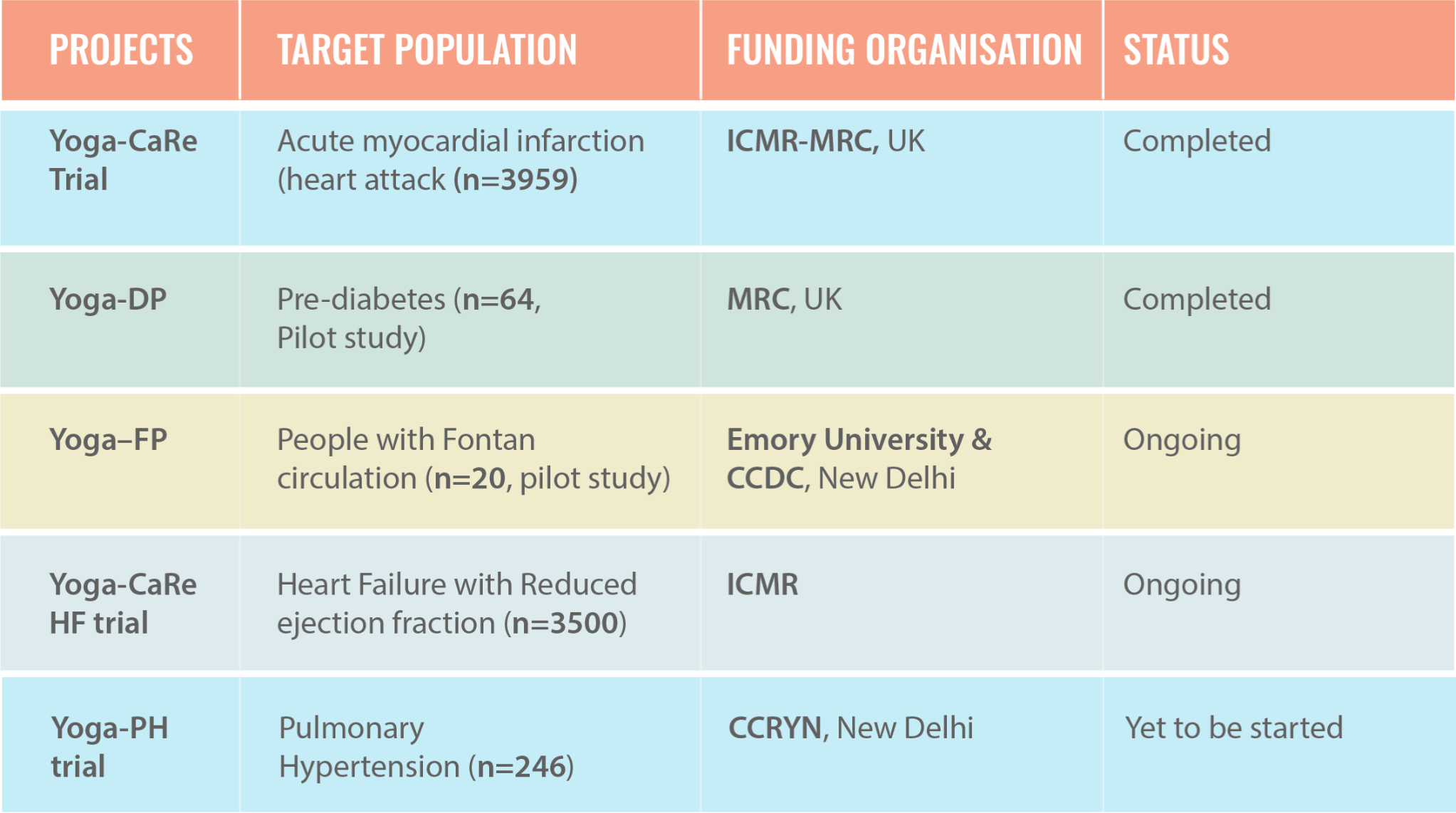
These findings led to the inception of the first Yoga-CaRe trial in 2013, a collaboration between the London School of Hygiene and Tropical Medicine. This trial received funding from prestigious Indo-UK collaborative research grants provided by ICMR and MRC, UK.

The trial found Yoga-CaRe program is safe, improves self-rated health, and returns to pre-infarct activities. Also, the trial reported, the Yoga-CaRe program can reduce cardiovascular events.

On similar lines, the Yoga-CaRe HF trial and Yoga-CaRe PH trial are being conducted as definitive clinical trials with adequate power to find differences in clinical endpoints. With the learning from the Yoga-CaRe trial, these trials are planned to ensure effective delivery of the intervention program while recruiting high-risk populations to ensure meaningful improvements with Yoga-CaRe, if any.

The Yoga-DP feasibility trial, a pilot study, aimed to show that conducting a multi-center randomized trial for the yoga-based diabetes prevention project is possible. It found that the Yoga-DP program is feasible and has the potential to enhance glycemic control in individuals with pre-diabetes. Likewise, the ongoing Yoga-FP trial assesses the safety and feasibility of yoga in patients who have undergone Fontan surgery. This study is currently underway at the Amrita Institute of Medical Sciences in Kochi.

Slide
Slide
Slide

IMPACT

The findings from these studies have the potential to transform the unmet needs of cardiac rehabilitation in the country. CCDC, through these initiatives, has built a network of hospitals for cost-effective academic cardiology studies. These projects include programs that train numerous research scientists and fellows, enhancing the country’s clinical research and yoga capabilities.

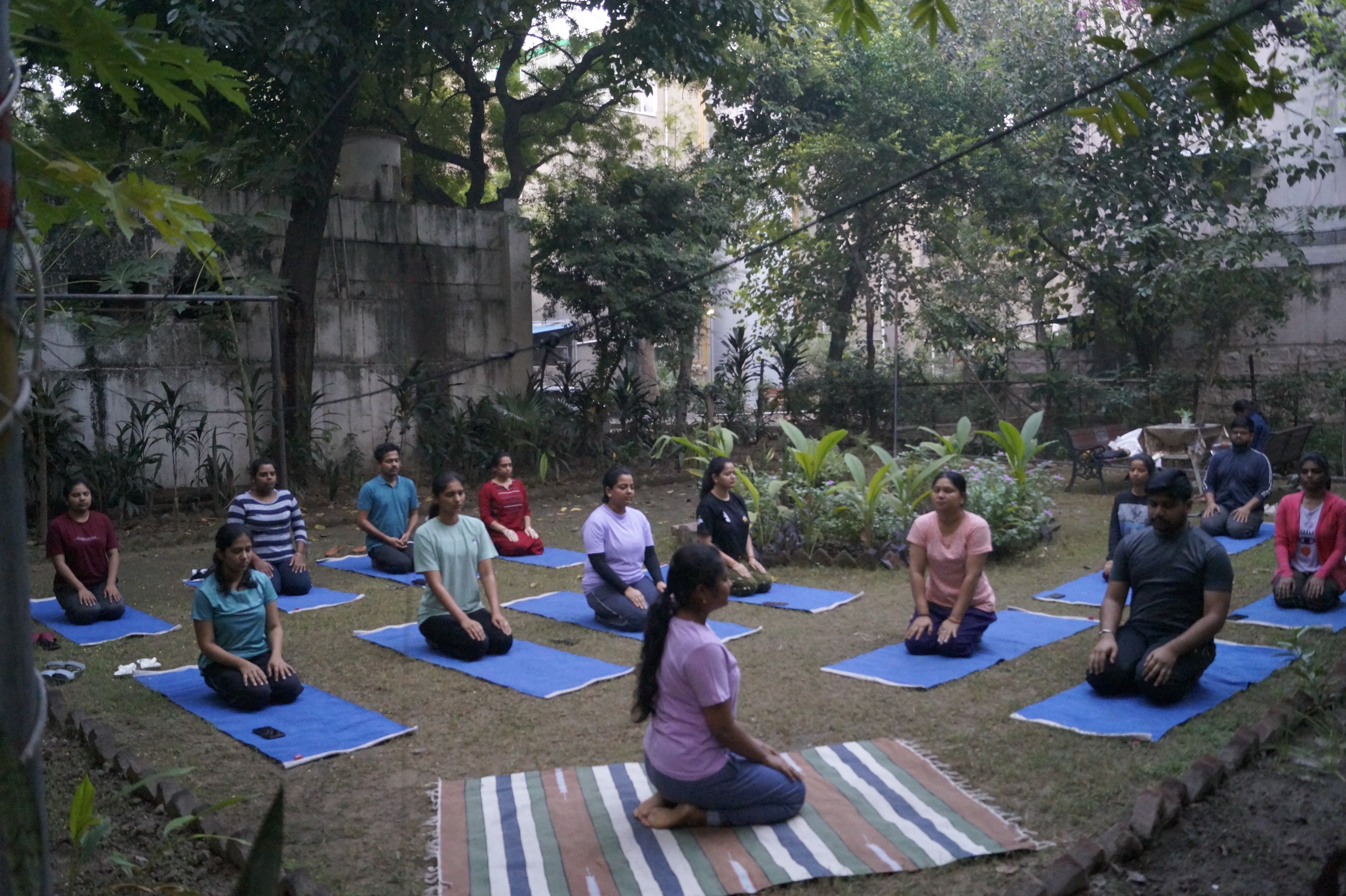
In collaboration with the Central Council for Research in Yoga & Naturopathy, New Delhi, we have trained more than 500 Yoga and Naturopathy doctors in the effective delivery of Yoga-CaRe program for patients with a history of heart attack.

Centre for Chronic Disease Control © 2025 All rights reserved.