Environmental Health

Effectiveness of Indoor Air Purifiers on Heart Failure Outcomes: PURI-HF Trial(December 2025‑December 2030)

The PURI-HF (Purifier Intervention in Heart Failure) project is a multi-site randomized controlled trial evaluating whether reducing household exposure to air pollution through the use of low-cost air purifiers can improve health outcomes among people living with heart failure with reduced ejection fraction (HFrEF). The project was initiated in response to growing evidence that exposure to ambient and household air pollution can adversely affect cardiovascular health, particularly among individuals who are already living with chronic heart and lung conditions. 

The project evaluates whether improving indoor air quality can translate into meaningful improvements in functional capacity, quality of life and healthcare outcomes. The primary outcome is the 6-minute walk test (6MWT), with secondary outcomes including health-related quality of life, hospitalizations, mortality, sleep, BP, and cost-effectiveness. The project also incorporates continuous environmental monitoring and digital health technologies to better understand participants’ exposure and engagement. 

The target beneficiaries are individuals living with HFrEF, particularly those residing in areas with high levels of air pollution. The project aims to generate evidence that can inform affordable, scalable approaches to reducing pollution exposure as part of cardiovascular disease management in India. The study is jointly funded by NIEHS and ICMR.
PROJECT EXECUTION

  • Study design: Multi-site randomized controlled trial with a target enrolment of approximately 600 participants. 
  • Study sites: AIIMS and Medanta in Delhi, Ludhiana, and Sree Chitra Tirunal Institute for Medical Sciences and Technology in Thiruvananthapuram. 
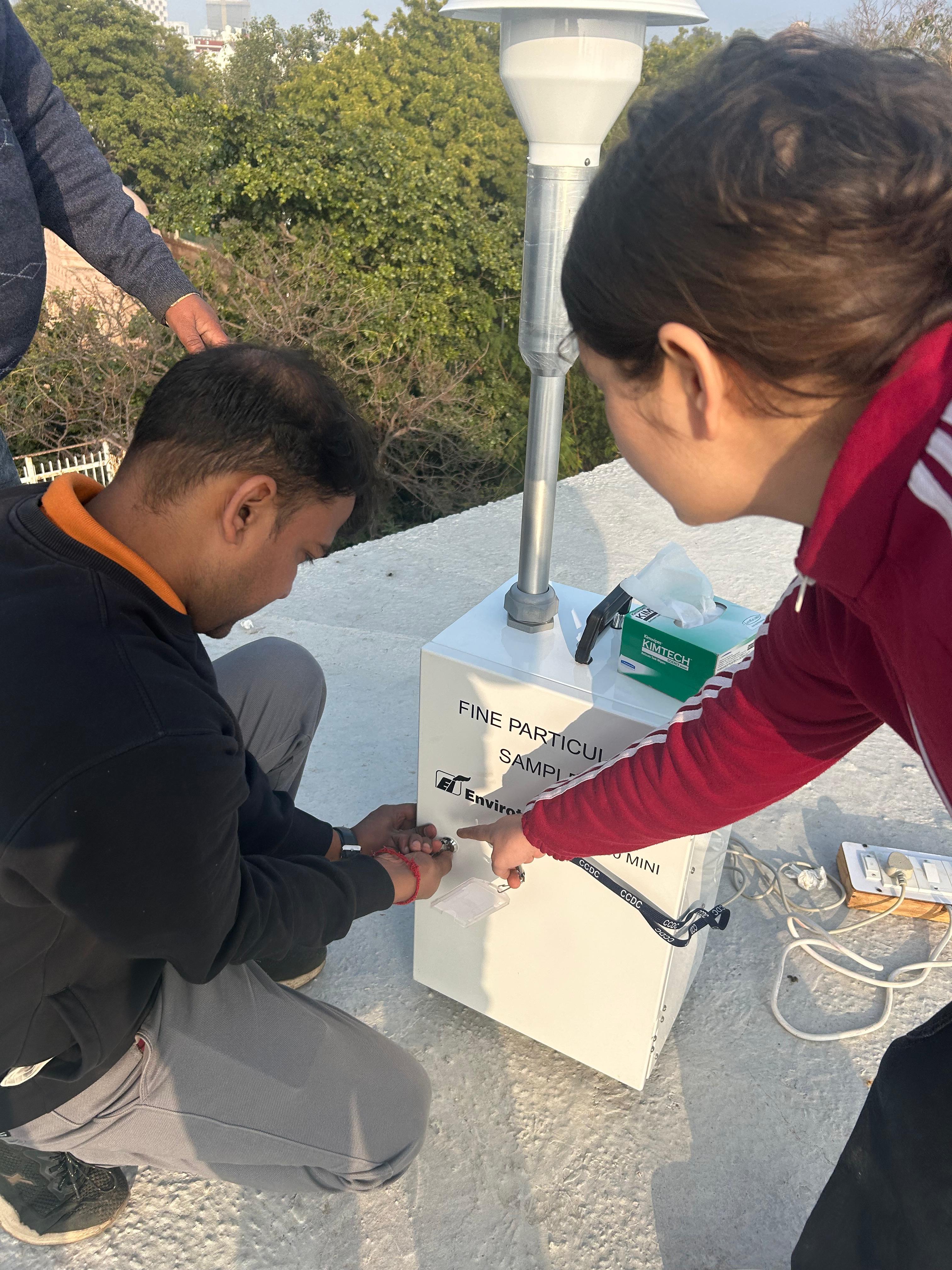
  • Intervention: Participants receive a low-cost air purifier designed for this study through an IIT Madras incubated start-up, with the intervention designed to reduce indoor particulate matter exposure. 
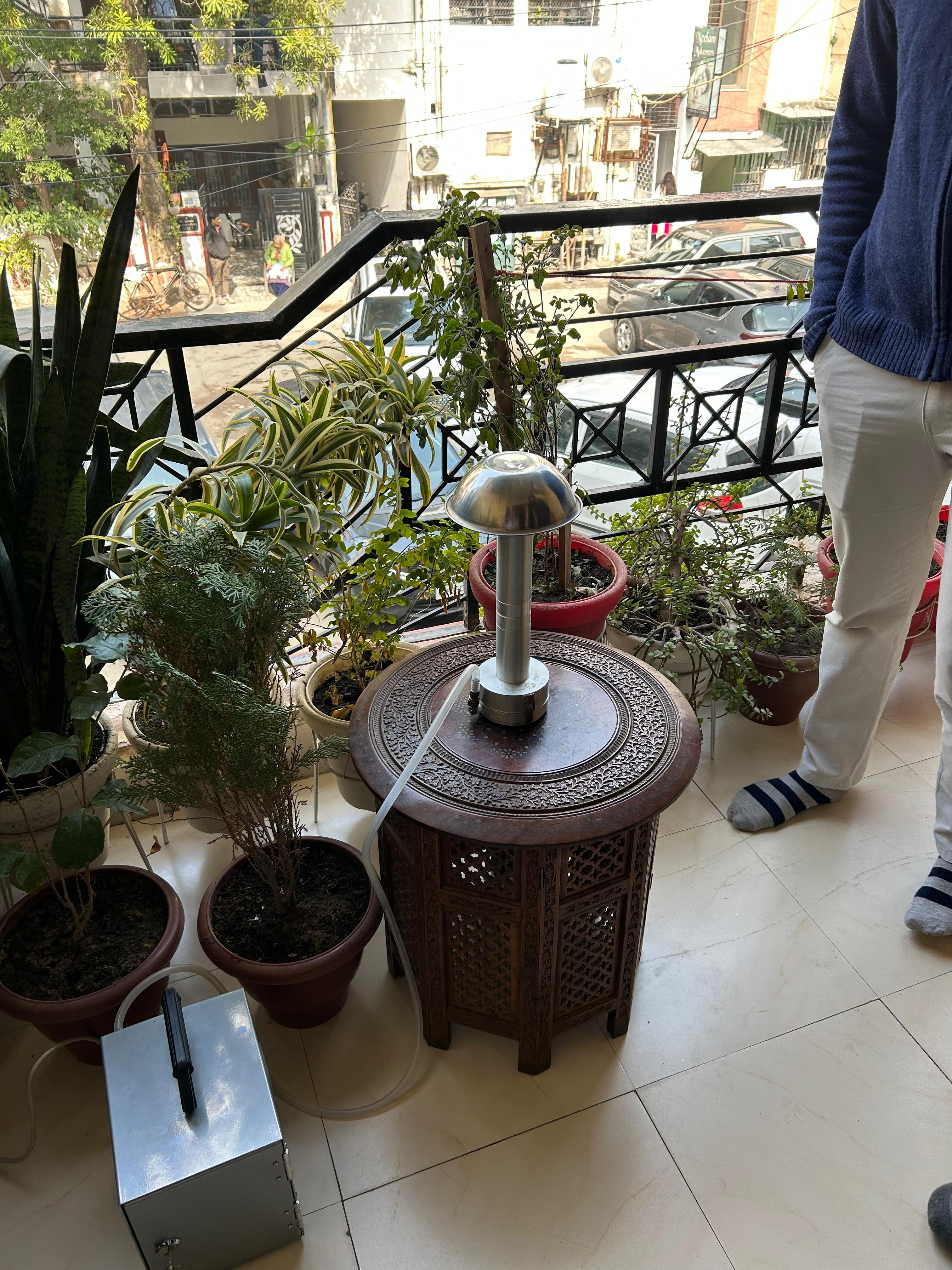
  • Environmental monitoring: Purifier-based sensors and independent air-quality monitors are used to assess indoor PM2.5 and purifier functioning. 
  • Digital monitoring: IoT-enabled purifier data are collected remotely to assess device operation and adherence. Watches and smartphones are also being used in a wearable sub-study to collect additional physiological and activity-related information. 
  • Participant engagement: Participants and families receive guidance on purifier operation, placement, maintenance and continued use, with emphasis on night-time use and use in the participant’s primary living space. 
  • Research activities: Baseline and follow-up assessments include 6MWT, quality-of-life measures, clinical parameters, hospitalizations and economic outcomes. 
  • Implementation: The project includes standardized site-level procedures for recruitment, intervention delivery, device tracking, technical support, data management and retrieval. 
  • Training: Exchange visits and observership programmes for partnering institutions across collaborating institutions between India and US. 
Slide
Slide
Slide
Slide

IMPACT

  • Target: Approximately 600 people living with HFrEF to be enrolled across participating sites. 
  • Current recruitment: More than 250 participants recruited across the participating centres. 
  • Digital/wearable component: More than 170 Apple Watch kits distributed as part of the wearable sub-study. 
  • Geographic coverage: Delhi, Ludhiana and Thiruvananthapuram. 
  • Institutions involved: Four major clinical research centres across three cities. 
  • Environmental monitoring: Deployment of IoT-enabled purifier monitoring and independent PM2.5 monitoring devices. 
  • Research outputs: Generation of evidence on the relationship between indoor air pollution reduction and functional capacity, quality of life, healthcare utilization and cost-effectiveness in HfrEF.  
  • Potential impact: The project aims to establish whether a relatively low-cost household intervention can become a feasible component of cardiovascular disease management in highly polluted settings. 

Centre for Chronic Disease Control © 2026 All rights reserved.