The initiative aimed to collaborate with various stakeholders to understand the shared risks of cancers and Diabetes Mellitus and close the gap between evidence and policy in India. In the initial two-year Phase, three demonstration projects were conducted within the longitudinal Center for Cardiometabolic Risk Reduction in South Asia (CARRS) Surveillance Study.
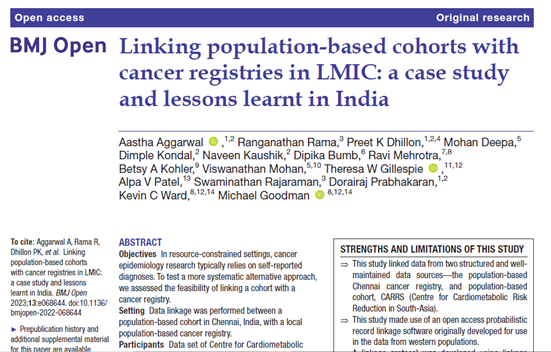
Project 1 | Development of a NCD cohort-cancer linkage in the CARRS cohort: Aim was to compare CARRS participants’ information on incident cancer in the Chennai cancer registry and compare these linkages to self-reports and verbal autopsy-classified cancer deaths of CARRS cohort in Chennai, Tamil Nadu. Utilizing linking variables with limited discriminatory power, an appreciable proportion of self-reported cases were confirmed in the registry via linkages. The linkages also identified many previously unreported cases. The project resulted in insights that can inform future cancer surveillance and research.
Project 2 | Diabetes- and cancer-related knowledge and psychosocial barriers to detection and treatment: A mixed methods study was conducted in CARRS’s Delhi and Chennai sites to explore the degree to which stigma is perceived, experienced, and internalized among adults living with cancer or diabetes and their primary caregivers. It was found that overall, 85% of cancer patients and 75% of caregivers reported experiencing some level of perceived, experienced, or internalized stigma. The findings indicated that fatalistic beliefs about cancer are prevalent, and basic education about cancer for the public, patients, and caregivers is required.
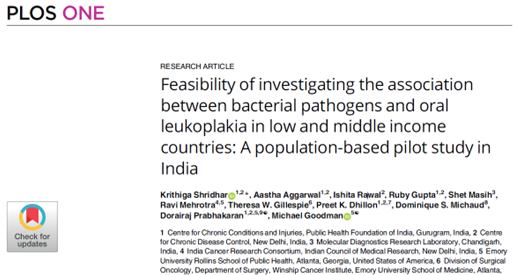
Project 3 | Establishing the feasibility of investigating microbiome in population-based studies– There is evidence for the association of microbiome with oral cancer and diabetes. A feasibility study was conducted in the Delhi site of CARRS study to investigate the association between selected bacterial pathogens and oral leukoplakia. The feasibility of evaluating oral microbiome in population studies was established and promising leads for future research were identified.
These activities were a testing ground for building and scaling up such initiatives for other cohorts in the country.